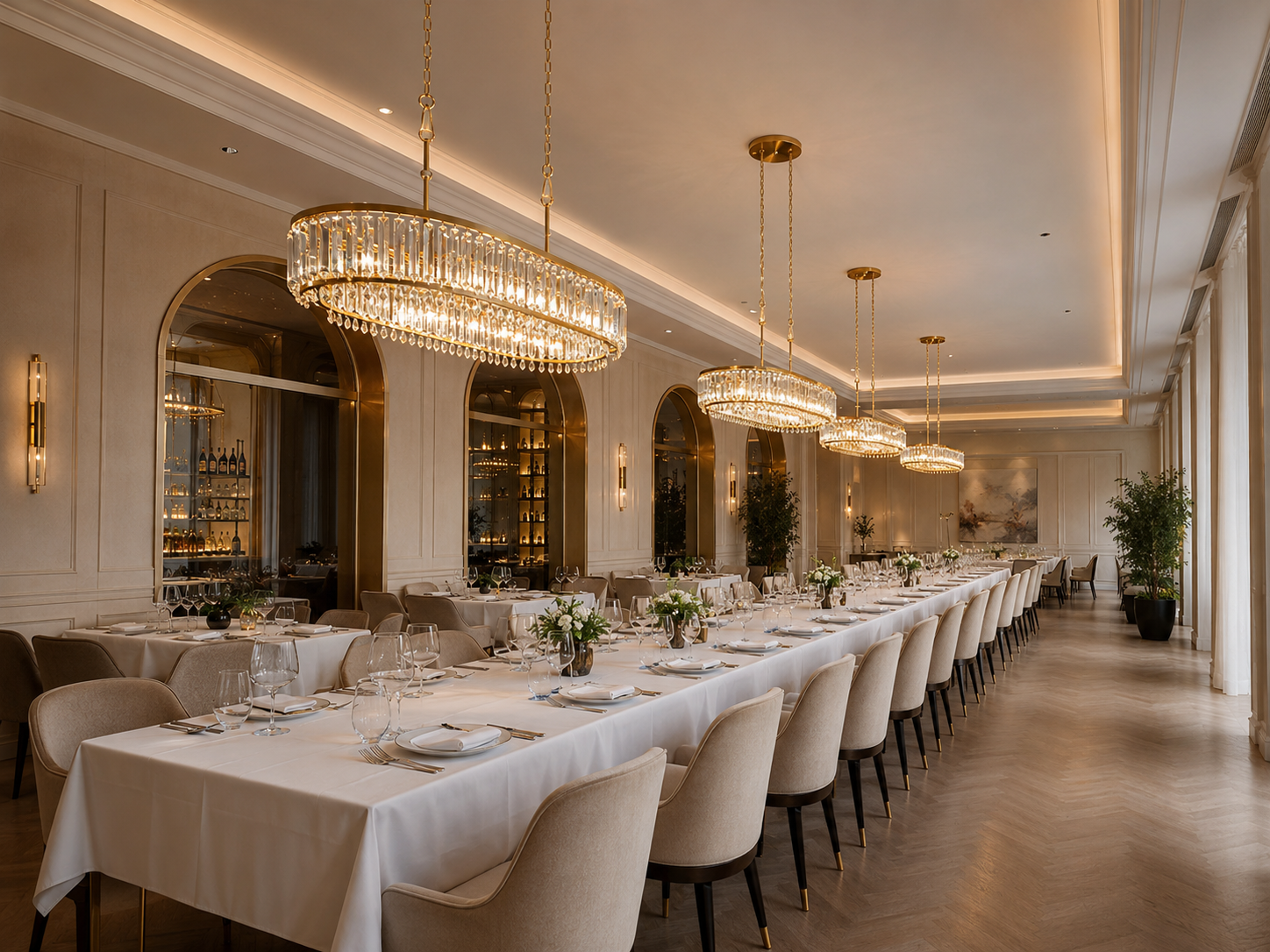

Crystal vs Glass Chandelier: What's the Difference?
The difference between a crystal and a glass chandelier is refraction. Crystal contains lead or high-grade optical material — like K9 crystal — that bends light into rainbow sparkle, while glass simply transmits light with a softer, flatter glow. Crystal is heavier, clearer, and more brilliant; glass is lighter and cheaper. For most homes, K9 crystal delivers the brilliance of fine crystal at a fraction of the price of premium hand-cut crystal. This guide explains the real differences and how to tell them apart.

What Is the Real Difference Between Crystal and Glass?
Both start as glass, but crystal adds lead oxide or is precision-made as optical crystal, which raises the refractive index — the measure of how much it bends light. Higher refraction means more sparkle and rainbow "fire."
- Refraction: crystal splits light into rainbows; glass glows but does not sparkle the same way.
- Clarity: crystal is clearer with fewer impurities; glass can have a faint green or grey tint.
- Weight: crystal is noticeably heavier and feels more substantial.
- Cut: crystal holds sharp, precise facets that catch light; molded glass has softer edges.

Crystal vs Glass: Side by Side
| Feature | Crystal (incl. K9) | Glass |
|---|---|---|
| Refraction / sparkle | High — rainbow fire | Low — soft glow |
| Clarity | Very clear | Often faint tint |
| Weight | Heavier | Lighter |
| Facet sharpness | Precise, crisp | Softer, rounded |
| Durability | Hard, but chips if knocked | Softer, scratches |
| Price | Mid to high | Low |
| Best for | Statement, luxury, refraction | Budget, casual, simple shapes |
Where K9 Crystal Fits
K9 is optical crystal — engineered for high clarity and a strong refractive index without the cost (or weight, or fragility concerns) of premium leaded crystal. It is why K9 has become the standard for quality chandeliers: it gives you the sparkle people associate with fine crystal at a sensible price. Full detail in .

How to Tell Crystal from Glass
Five quick checks:
- Look for rainbows. Hold it to light — crystal throws rainbow flecks; glass just shines.
- Feel the weight. Crystal is heavier for the same size.
- Check clarity. Crystal is colorless; glass often has a slight tint.
- Tap it gently. Crystal gives a clear ringing "ping"; glass gives a dull thud.
- Look at the price. A "crystal" chandelier priced like a toy is almost always glass or acrylic — see real ranges in our .
Which Should You Choose?
Choose crystal (K9) if you want sparkle, refraction, and a fixture that reads as a centerpiece — the right call for dining rooms, foyers, and any statement location.
Choose glass if you want a simple, budget-friendly fixture for a casual or low-traffic space and don't need the rainbow brilliance.
For most buyers investing in a focal-point chandelier, K9 crystal is the sweet spot. Browse the , or start with our .
Crystal vs Glass Chandelier FAQ
Is a crystal chandelier better than a glass one?
For sparkle and visual impact, yes — crystal refracts light into rainbow fire while glass only glows. Glass is cheaper and fine for casual spaces, but crystal is the better choice for a statement fixture.
How can I tell if a chandelier is crystal or glass?
Crystal throws rainbow reflections in light, feels heavier, is clearer, and rings with a clear tone when tapped. Glass shines without rainbows, is lighter, often slightly tinted, and sounds dull.
Is K9 crystal real crystal?
Yes. K9 is optical crystal with high clarity and a strong refractive index, offering the brilliance of fine crystal at a more accessible price than premium leaded crystal.
Why are glass chandeliers so much cheaper?
Glass lacks the lead or optical content that creates refraction, is lighter and easier to mold, and does not deliver the sparkle of crystal — so it costs far less to produce.
See the difference for yourself in the , or with questions. More guides in the .