
Alabaster lighting is made from genuine natural stone — a fine-grained form of gypsum — cut thin enough for light to pass through. When lit, the stone diffuses light through its mineral veining, so every fixture glows with a one-of-a-kind pattern that no printed glass or resin copy can reproduce. Alabaster fixtures come in three main forms: ring chandeliers for dining rooms and stairwells, pendant lights for kitchen islands and bedsides, and wall sconces for hallways and bedrooms. This guide explains how the stone works, how it compares to marble, glass, and crystal, and how to choose the right piece for each room.

What Is Alabaster?
Alabaster is a soft, fine-grained gypsum stone (calcium sulfate) that has been carved for lamps and vessels for over 2,000 years. The alabaster used in modern lighting comes primarily from Spain, where quarries in the Aragón region produce stone with the high translucency and pronounced veining that lighting makers prize. Esperilux uses natural Spanish alabaster across its .
Two properties make alabaster ideal for lighting. First, translucency: cut to shade thickness, the stone transmits warm light instead of blocking it. Second, uniqueness: veining is formed by mineral deposits over millions of years, so no two shades share the same pattern — the fixture you receive is genuinely one of one.
How Alabaster Light Differs from Crystal, Marble, and Glass
Crystal refracts light into sparkle; alabaster diffuses it into an even, warm glow. That single difference decides which material fits a room: choose when you want brilliance and ceremony, and alabaster when you want calm, sculptural warmth.
| Material | How it handles light | Pattern | Best for |
|---|---|---|---|
| Alabaster | Diffuses into soft, even glow | Natural veining, unique per piece | Organic modern, quiet luxury interiors |
| Marble | Mostly opaque; edges glow faintly | Natural veining, low translucency | Accent panels, flush mounts |
| Frosted glass | Diffuses evenly | Uniform, no veining | Budget minimalist fixtures |
| K9 crystal | Refracts into sparkle and rainbow fire | Precision-cut facets | Formal dining rooms, foyers, glam interiors |
A quick authenticity check: genuine alabaster shows irregular veining that interrupts and varies across the shade, feels like cool stone rather than warm resin, and its glow shifts subtly in intensity across the surface. Printed "alabaster-style" glass repeats its pattern uniformly and lights up with flat, even brightness.
The Three Types of Alabaster Lighting
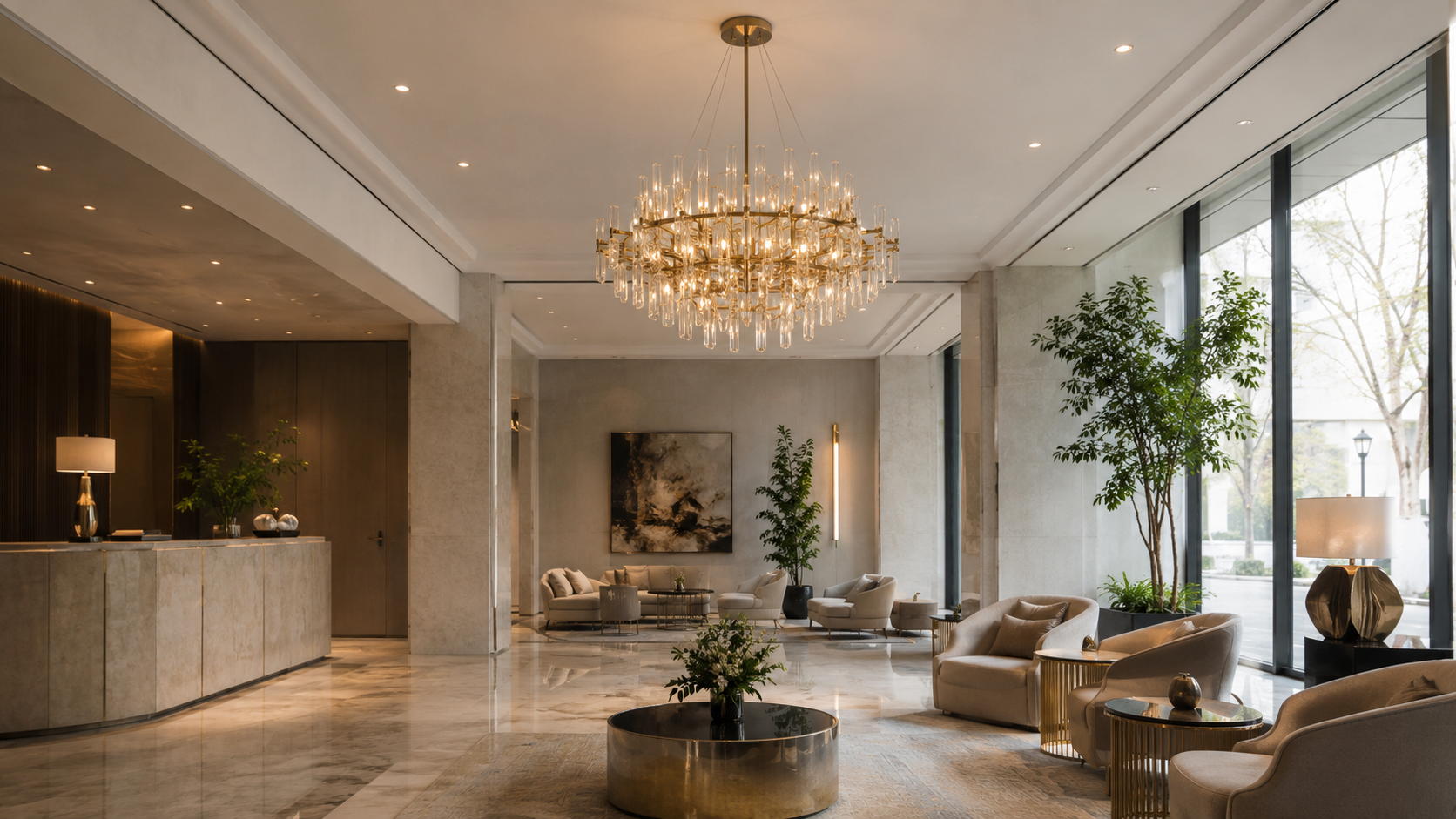
Ring chandeliers arrange alabaster segments into open halos, lit by integrated LEDs. Single rings suit bedrooms and kitchens; two- and three-tier designs anchor dining rooms, living rooms, and stairwells. The Esperilux collection includes the Kyklos single halo in three sizes and the Stefani, available in one, two, or three tiers. Stone halos pair with brass canopies and ship with their LED sources included.

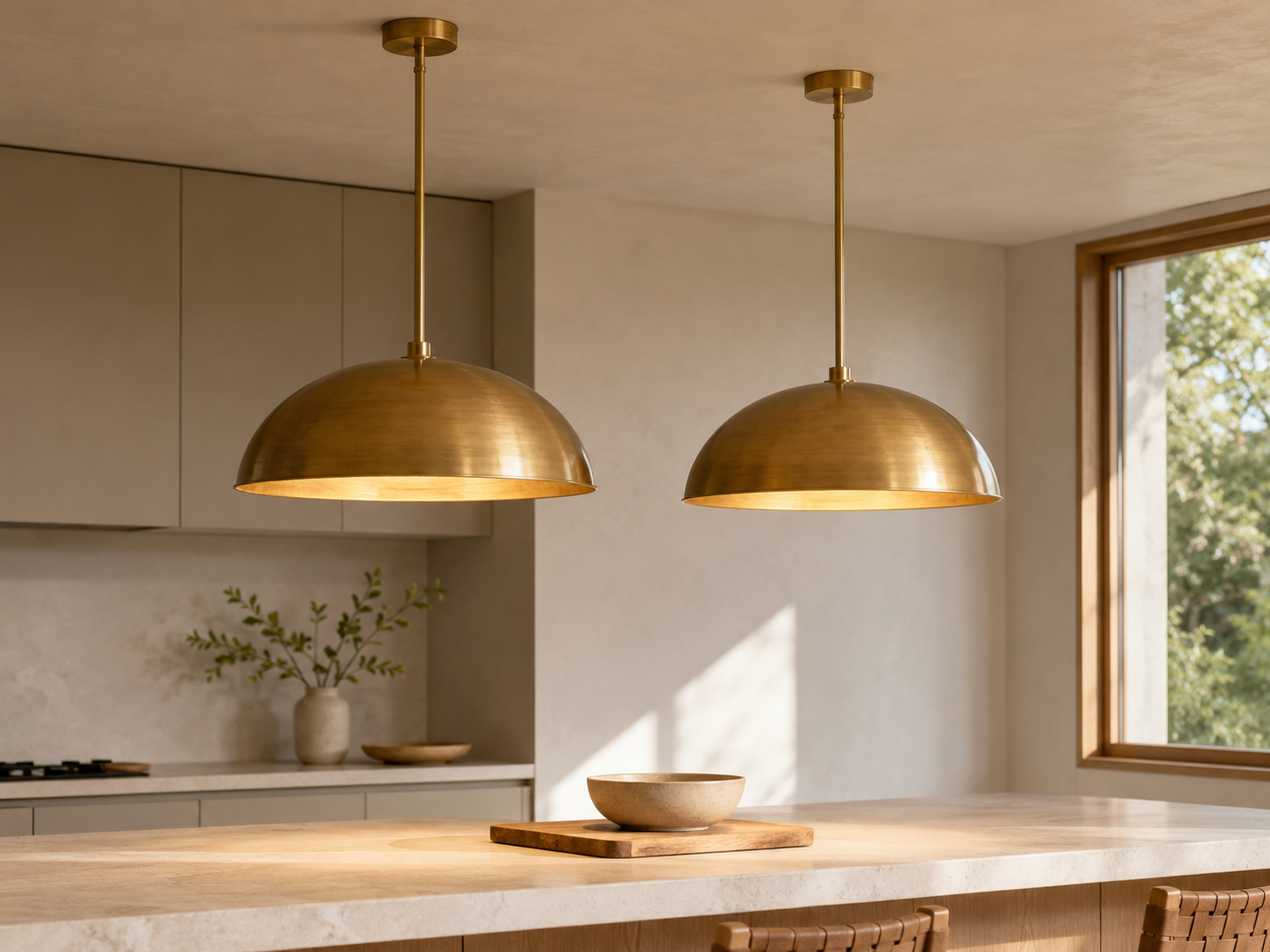
Pendant lights put a single carved shade on a cable or brass stem. The collection spans three silhouettes: the Kova dome for kitchen islands, the elongated Yafeh for bedsides and dining nooks, and the Bosso mini sphere (4.7" or 5.9") on a slim brass stem. Hang pendants in pairs or rows of three for an even wash of warm light over an island or counter.
Wall sconces mount carved alabaster cylinders on brass bases, washing light up and down the wall. The collection includes the Marmo (15.7") and the Falynis (11.8" to 31.4"). Install sconces in pairs — flanking a bed, a mirror, or a doorway — with the center of the fixture 60 to 66 inches above the floor.

Sizing Alabaster Fixtures
The standard chandelier sizing rule applies to stone halos: add a room's length and width in feet, and that number in inches is your target diameter — a 12 ft × 14 ft dining room takes a ring roughly 26 inches across. Over a dining table, keep the fixture 30 to 36 inches above the tabletop; over a kitchen island, hang pendants 30 to 34 inches above the counter. For multi-tier rings in stairwells and two-story foyers, work through our full .
How to Care for Alabaster
Alabaster is a soft stone (Mohs hardness 2) and gypsum is sensitive to moisture, so care differs from glass and crystal:
- Dust with a dry microfiber cloth or a soft brush — monthly is enough for most rooms.
- Never use water, glass cleaner, or solvents; liquids can penetrate the porous stone and leave permanent marks.
- For stubborn marks, rub gently with a white vinyl eraser, then dust clean.
- Leave the LED sources in place: LEDs run cool and emit negligible UV, which protects the stone's color over time.
Alabaster Lighting FAQ
Is alabaster lighting bright enough to be the main light source?
A multi-tier alabaster ring chandelier delivers enough diffused light to serve as a dining or living room's primary fixture. Single pendants and sconces are layering lights — plan them as bedside, island, or hallway lighting alongside a main source.
Does alabaster change color over time?
With LED sources, no meaningful change occurs: LEDs emit almost no heat or UV, the two factors that age natural stone. Alabaster shades kept away from direct sunlight retain their original tone.
Why do prices vary so much between alabaster fixtures?
Stone grade, shade size, and carving complexity drive cost. Larger shades must be cut from larger flawless blocks, which are rarer — a full halo of matched stone segments costs more per inch than a small pendant shade.
How do I know I'm getting real alabaster and not printed glass?
Look for irregular veining that varies across the shade, ask the seller to confirm the stone's origin, and check product photos across multiple listings — real stone never shows the identical pattern twice.