
What Is a Maria Theresa Chandelier? A Complete Style Guide
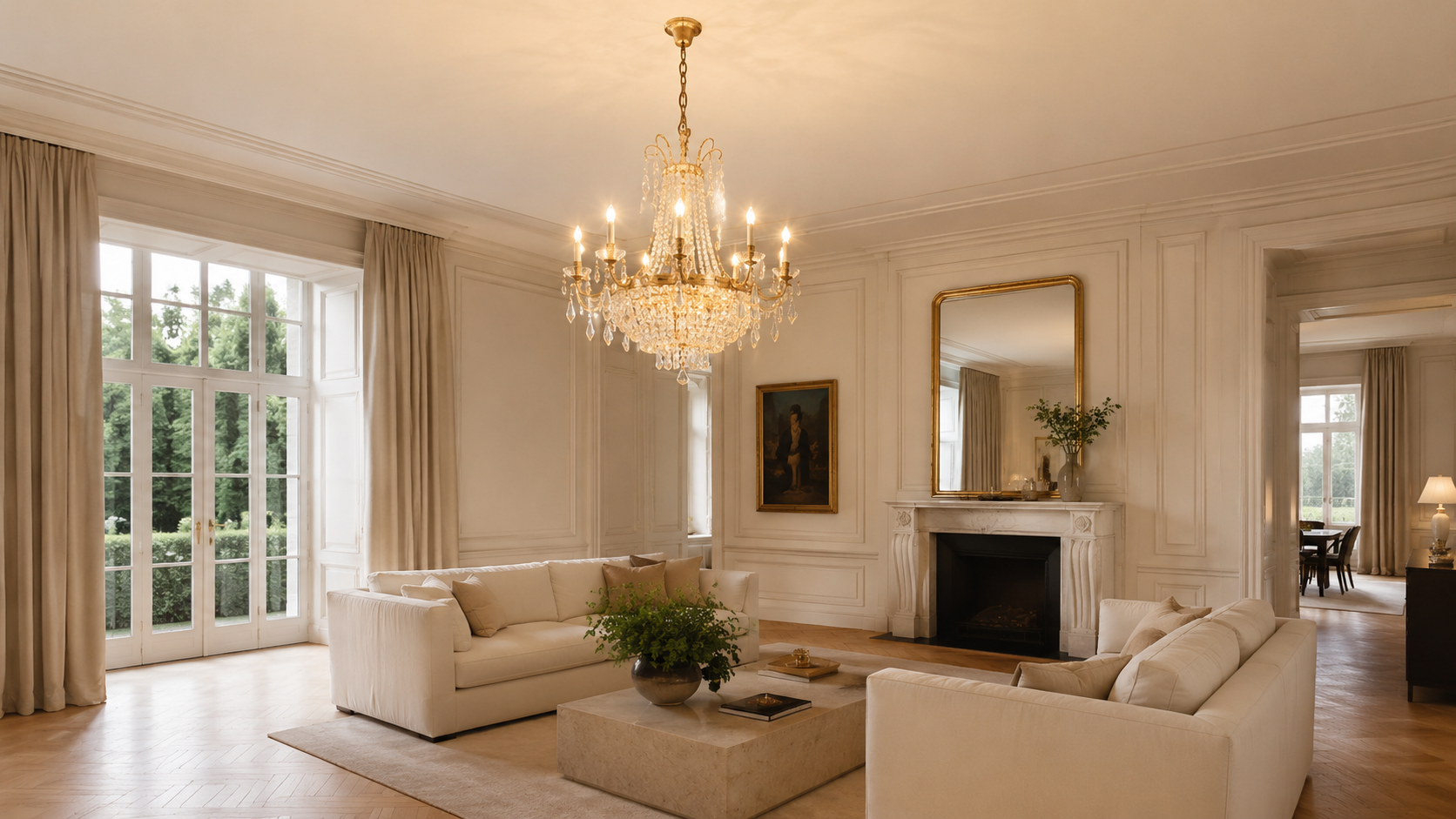
A Maria Theresa chandelier is a classic crystal chandelier whose metal arms are entirely wrapped in crystal beads and plaques, named after the 18th-century Empress Maria Theresa of Austria. Its signature is the crystal-encased frame — even the structure sparkles — usually on a gold or gilded body with multiple arms and tiers. It is one of the most recognizable and enduring chandelier styles, prized for formal dining rooms, foyers, and grand staircases. This guide covers its history, features, uses, and how to choose one.

The History Behind the Style
The style dates to the mid-1700s and the court of Empress Maria Theresa of Austria, an era when crystal-covered fixtures signaled wealth and refinement. The defining innovation was wrapping the metal frame itself in cut crystal, so the chandelier sparkled from every surface rather than only from hanging drops. Nearly three centuries later, the silhouette remains a byword for traditional grandeur.
Signature Features
What makes a chandelier "Maria Theresa":
- Crystal-wrapped arms. The metal arms are sheathed in crystal beading and rosettes — the single most defining trait.
- Crystal plaques and rosettes join the arms to the central column, hiding the metalwork behind glass.
- Gold or gilded frame, traditionally warm-toned to complement the crystal.
- Multiple arms and often multiple tiers, creating a full, symmetrical, layered form.
- K9 crystal in modern versions for clarity and refraction — see (/blogs/articles/what-is-k9-crystal-a-practical-guide-for-crystal-chandeliers).
Explore the full range in the (/collections/maria-theresa-crystal-chandeliers).

Where to Use a Maria Theresa Chandelier
This is a statement style suited to spaces that can carry traditional grandeur:
- Formal dining rooms — a classic centerpiece above the table; see the .
- Two-story foyers and entries — the crystal-wrapped form reads beautifully from above; see the .
- Grand staircases — multi-tier versions fill vertical stairwell space; see the .
- Hotels, ballrooms, and villas — a traditional choice for hospitality; see .

How to Choose and Size One
The same sizing rules apply as any chandelier:
- Over a dining table: one-half to two-thirds the table width.
- In a room: add the room's length and width in feet; the sum in inches is your target diameter.
- Ceiling height: allow more vertical room for multi-tier versions, which run taller than single-tier fixtures.
Full measurements are in the . For pricing, see the (/blogs/articles/crystal-chandelier-cost), and for a one-of-a-kind size or finish, .
Traditional vs. Modern Interpretations
Classic Maria Theresa fixtures lean fully traditional — ornate, gilded, multi-tier. Modern versions keep the signature crystal-wrapped arms but simplify the form for transitional interiors. Both deliver the unmistakable all-over sparkle that defines the style. If you're comparing it to other looks, see .
Maria Theresa Chandelier FAQ
What is a Maria Theresa chandelier?
It is a classic crystal chandelier whose metal arms are completely wrapped in crystal beads and plaques, named after the 18th-century Empress Maria Theresa of Austria. Its signature is that the frame itself sparkles, usually on a gold body with multiple arms and tiers.
Why is it called a Maria Theresa chandelier?
It is named after Empress Maria Theresa of Austria, during whose 18th-century reign the crystal-wrapped frame style became a symbol of wealth and refinement.
Where does a Maria Theresa chandelier look best?
In formal dining rooms, two-story foyers, grand staircases, and hospitality spaces — anywhere that suits traditional grandeur and has room for a statement fixture.
Are Maria Theresa chandeliers outdated?
No. While modern designs trend toward cleaner frames, the Maria Theresa style remains a timeless classic, and modern K9 crystal versions keep it relevant for both traditional and transitional interiors.